An electromechanical assembly is an integrated unit in which mechanical components, such as machined parts, enclosures and fasteners, are combined with electrical or electronic components, such as wiring, connectors and circuit boards, to perform a defined function. The mechanical structure provides support and alignment, while the electrical elements provide power, signal or control. Electromechanical assemblies range from a simple sensor bracket to a fully wired box build.
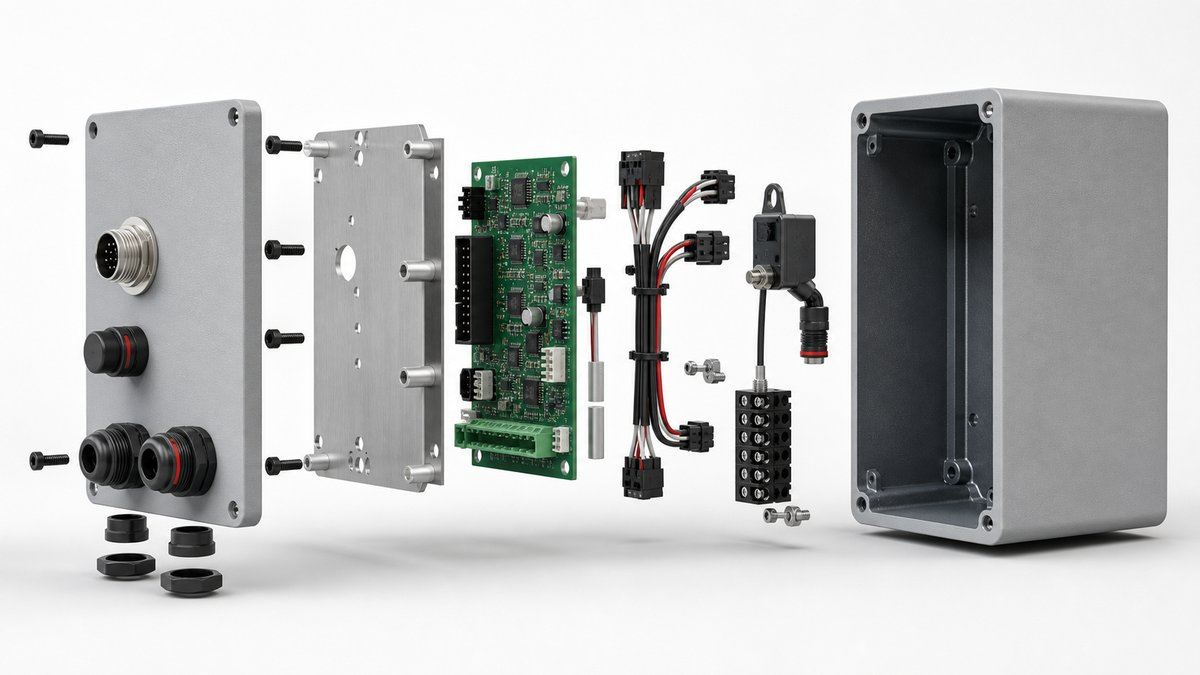
Manufacturers use the term to describe a wide range of products, from control panels and instrument housings to motor assemblies and automated equipment. Depending on the agreed scope of work, an electromechanical assembly may arrive ready for installation, system integration, or additional customer-level testing, rather than as separate parts still requiring outside assembly.
What Components Make Up an Electromechanical Assembly?
An electromechanical assembly combines mechanical, electrical and, in many cases, control components into a single functional unit.
Mechanical components provide the structure that holds everything else in place:
- Machined or fabricated housings and enclosures
- Brackets, chassis and mounting plates
- Fasteners, standoffs and threaded inserts
- Bearings, shafts, gears and other motion elements
Electrical and electronic components provide power, signal transfer and control:
- Wiring and cable assemblies
- Connectors and terminals
- Printed circuit boards (PCBs) or control cards
- Switches, sensors and indicator elements
Not every assembly includes all of these. A simple electromechanical bracket assembly may involve only wiring and a sensor, while a full box build integrates an enclosure, internal wiring, a control card and a front panel. The specific mix depends entirely on what the finished product needs to do.
How Does an Electromechanical Assembly Come Together?
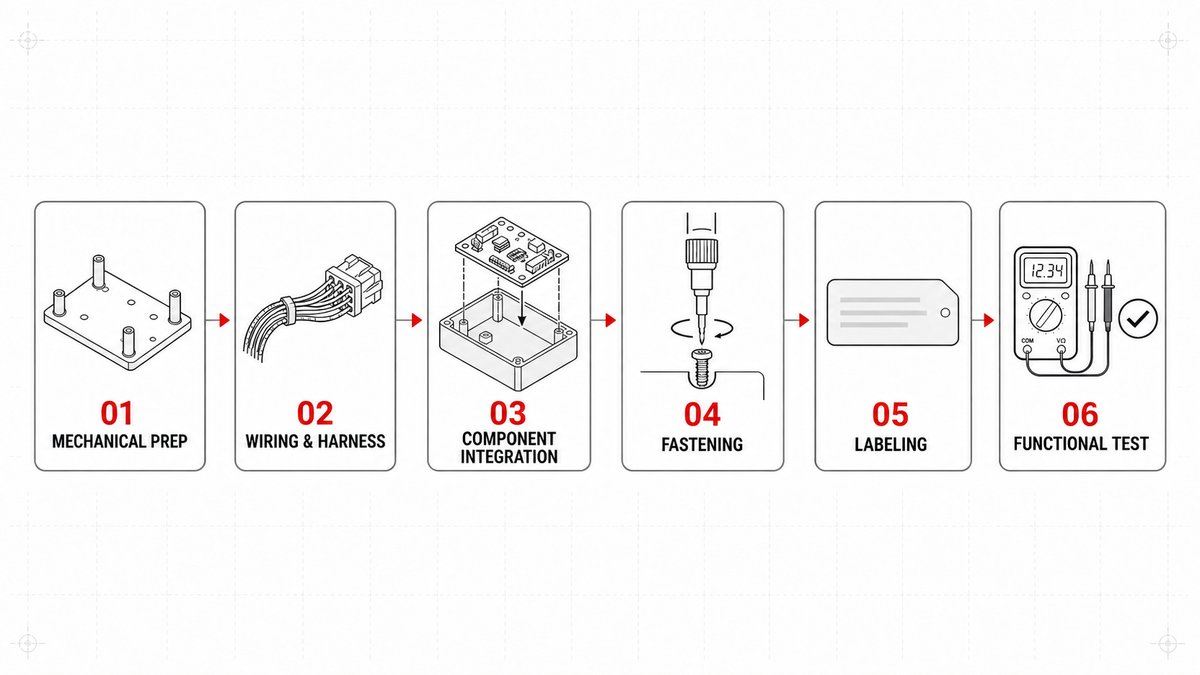
Electromechanical assembly generally follows a defined sequence, though the exact steps depend on the product and its complexity.
- Mechanical preparation. Machined or fabricated parts, enclosures and hardware are inspected and prepared for assembly.
- Wiring and harness installation. Cables, wires and connectors are routed, terminated and secured according to the assembly drawing.
- Component and card integration. PCBs, control cards or other electronic modules are mounted and connected.
- Fastening and torque control. Mechanical hardware is installed to specified torque values, since under- or over-torquing can affect both mechanical fit and electrical contact.
- Labeling and documentation. Parts, wires and assemblies are labeled to match drawings and work instructions, supporting traceability.
- Functional testing. The completed assembly is tested to confirm it performs as designed before release.
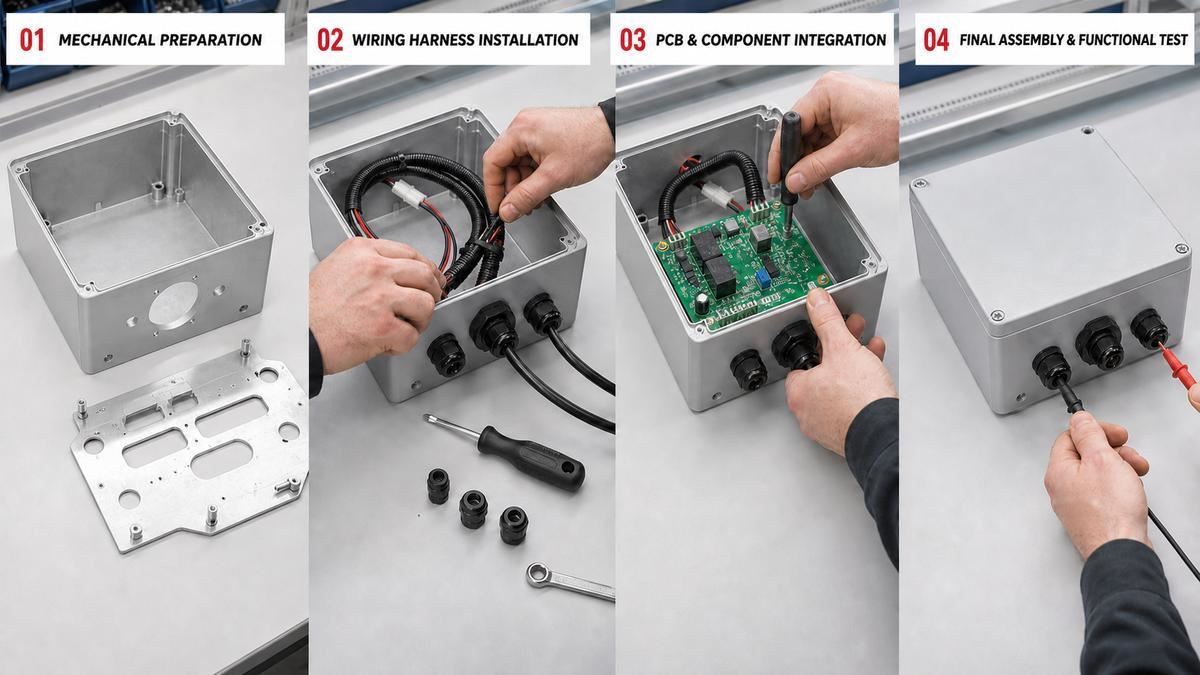
Skipping or reordering these stages is a common source of rework. A wiring harness installed before final mechanical fit-up, for example, can require partial disassembly later if a bracket or panel needs adjustment.
What Is a Wiring Harness?
A wiring harness is an organized bundle of wires and cables, secured together and routed as a single unit rather than as loose individual wires. Harnesses simplify installation, protect wiring from abrasion and movement, and make an assembly easier to inspect and service. Cable and wire harness assemblies used in many industrial, aerospace and defense applications may be built and inspected in accordance with IPC/WHMA-A-620, where specified by the applicable customer, product, or contract requirements. The standard defines requirements and acceptance criteria for cable and wire harness workmanship, including wire preparation, terminations, and related assembly activities.
Mechanical vs. Electrical Responsibilities in an Electromechanical Assembly
| Responsibility |
Mechanical side |
Electrical side |
| Structure and alignment |
Enclosures, brackets, fasteners |
N/A |
| Power and signal transfer |
N/A |
Wiring, connectors, terminals |
| Motion and mounting |
Bearings, shafts, mounting hardware |
N/A |
| Control and logic |
N/A |
PCBs, control cards, switches |
| Environmental protection |
Gaskets, sealing, enclosure design, strain relief |
Conformal coating, shielding, grounding and bonding |
| Verification |
Dimensional inspection, torque checks |
Continuity, functional and electrical testing |
A single supplier managing both sides of this table can catch fit and interference issues before they reach final testing, since a mechanical clearance problem often only becomes visible once the wiring and components are in place.
How Is an Electromechanical Assembly Tested?
Functional testing confirms that a completed electromechanical assembly performs its intended function within specified parameters. Depending on the product specification, testing may include electrical continuity, wiring and polarity verification, insulation or dielectric tests, and operation of switches, sensors, actuators, or control functions. Testing typically follows a written test plan agreed for the specific assembly, since what "functional" means varies by product: a control panel and a motorized bracket assembly are tested differently. Results are recorded as part of the assembly's documentation, supporting traceability back to the specific unit, batch or serial number.
Beyond functional verification, certain assemblies may also require environmental testing to assess reliability under specified operating and environmental conditions.
Electromechanical Assembly vs. Mechanical Subassembly
An electromechanical assembly includes electrical or electronic elements: wiring, connectors, PCBs or control components, integrated with mechanical structure. A mechanical subassembly, by contrast, combines only mechanical parts, such as a machined housing fastened to a bracket, with no wiring or electronics involved. The distinction matters when scoping outsourced work: a project that only needs mechanical fit-up and fastening can stay a mechanical subassembly, while any wiring, PCB or functional-test requirement moves it into electromechanical assembly territory. Terminology can vary by industry and by contract, so the scope should be confirmed in the assembly drawing and specification rather than assumed from the name alone.
Where Are Electromechanical Assemblies Used?
Electromechanical assemblies appear across a wide range of industries, including:
- Industrial automation and control panels
- Medical device housings and instrumentation
- Aerospace and defense equipment
- High-tech and semiconductor systems
- Test and measurement instruments
The common thread across these applications is that a mechanical structure and an electrical or electronic system need to function together as one delivered unit, rather than as parts assembled separately at a later stage. Engineers evaluating a supplier for this kind of work often start by asking what is an electromechanical assembly in the context of their own product, since the answer shapes whether the project needs a mechanical subassembly, a full box build, or something in between.
From Assembly Requirements to Manufacturing Scope
Understanding the components and processes involved in an electromechanical assembly is an important first step. In a manufacturing project, drawings and specifications must also define mechanical interfaces, electrical connections, inspection criteria, and functional testing requirements.
To learn how ShvaveyMetal manages these requirements through controlled manufacturing and integration processes, explore our electromechanical assembly services.